When George Washington died in 1799, Congress could think of no better way to honor the first president than by laying him to rest in the U.S. Capitol. The building had been under construction since Washington himself laid the cornerstone in 1793, and plans were quickly approved to add a burial chamber two stories below the rotunda with a 10-foot marble statue of Washington above it. Visitors would be able to view the tomb via a circular opening in the center of the rotunda floor. There was just one problem: Washington had already designated his Mount Vernon estate as his final resting place, meaning neither he nor anyone else is actually buried in the space.




Oops, incorrect!
It’s a factHe ran essentially unopposed in both 1788 and 1792, thereby winning every available electoral vote — 69 the first time, 132 the second — in each election.
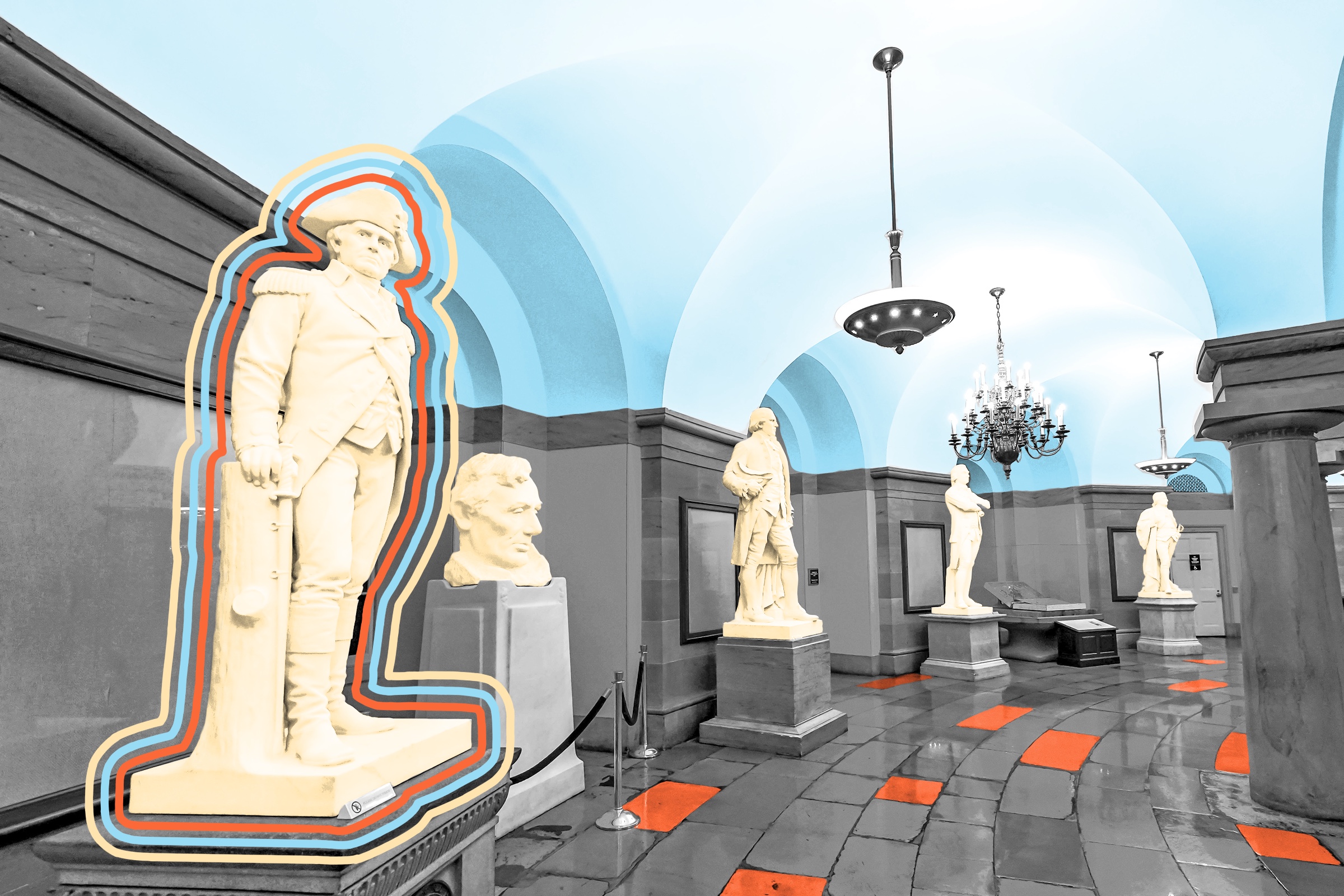
Somewhat confusingly, the room above the burial chamber is called the Capitol Crypt today, though that name came about much later and reportedly refers to its resemblance to similar vaulted spaces in European churches. This room, which was finally completed in 1827, has gone by a few different names over the years. The 1797 plan by architect William Thornton labeled the space the Grand Vestibule, whereas architect Benjamin Henry Latrobe’s 1806 plan referred to it as the General Vestibule to all the Offices, and an 1824 report of the Commissioners of Public Buildings simply called it the lower rotundo.

The Capitol Crypt’s sandstone floor was sourced from a quarry in ______.
Ready to reveal?
Confirm your email to play the next question?