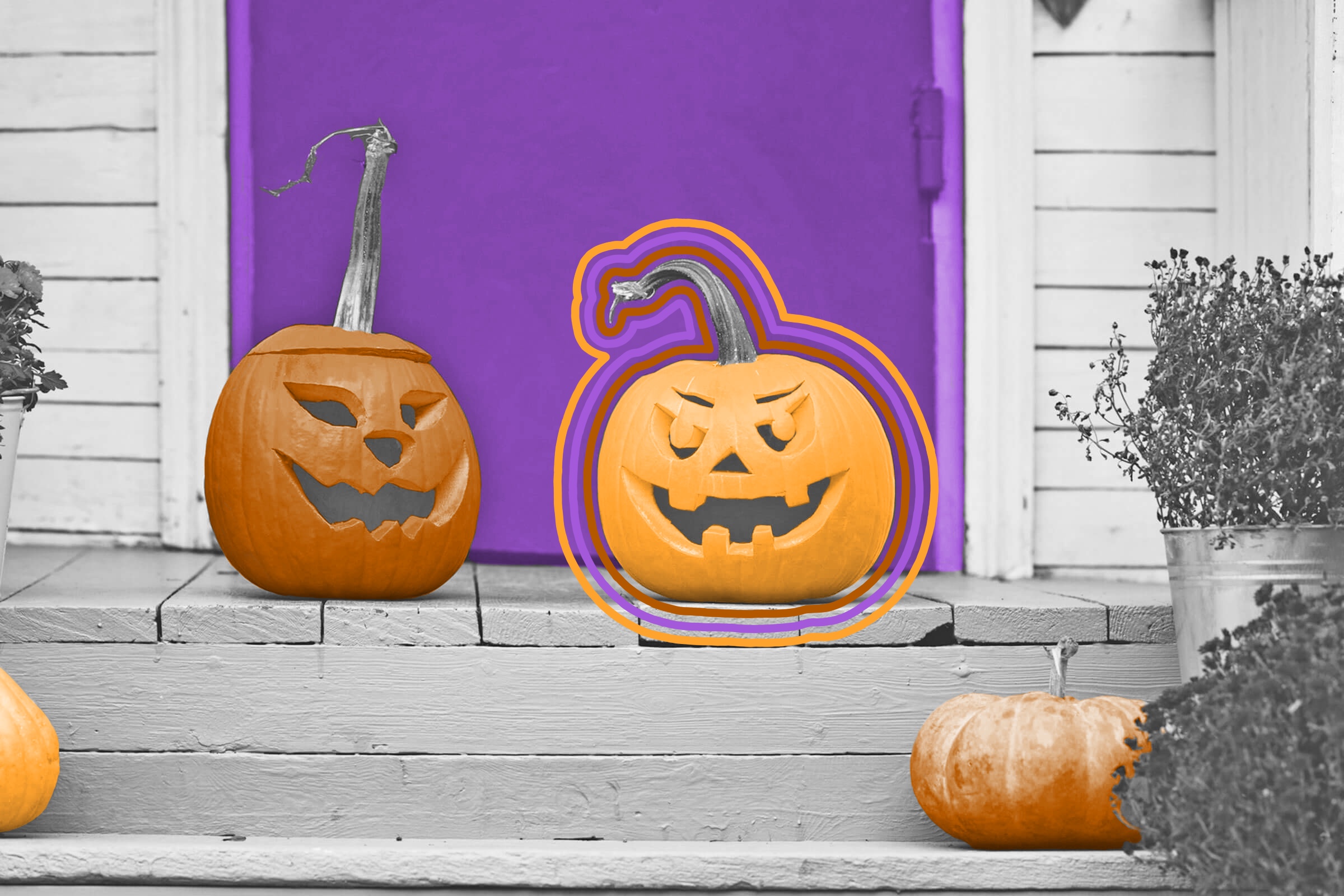
No matter what face you carve into your Halloween pumpkin, it will probably be called the same thing: a jack-o’-lantern. But how did spooky illuminated squash get that name? Turns out, the term we use to describe glowing pumpkins comes from Stingy Jack, the main character in a centuries-old Irish myth.




Oops, incorrect!
It’s a fibDespite often being considered a vegetable thanks to its savory flavor, the pumpkin is actually botanically a fruit. It’s all about how they grow; because pumpkins grow from a pollinated flower, just like sweeter fruits, they’re classified that way regardless of how we cook them.
Americans haven’t always carved pumpkins; it wasn’t until the mid-1800s that squash was used for holiday fun. About 200 years before, those celebrating the harvest season in Ireland made their own lanterns from turnips, beets, and other root vegetables as a way to ward off Stingy Jack, a phantom who roamed the countryside around the harvest. According to Irish lore, Stingy Jack (sometimes called Flakey Jack) was a swindler who took up drinking with the devil, though when the tab came due, he didn’t want to pay his share. After convincing the devil to turn into a coin, Jack trapped his drinking partner in his pocket, releasing him only with the agreement that Jack’s soul would stay free of the underworld. However, as in all folktales, there was a catch (and a warning about immoral behavior): At the end of his life, Jack’s trickster soul wasn’t accepted into heaven or hell, leaving him to wander the earth with naught but a coal (provided by the devil himself) inside a turnip-turned-lantern. By the story’s end, Stingy Jack became “Jack of the Lantern,” which eventually morphed into “Jack O’Lantern.”
Irish immigrants brought the Stingy Jack story to America, though the name and practice of jack-o’-lantern carving took some time to catch on. It particularly picked up following the Civil War, when a grief-struck nation became fascinated by spirits and ghost stories, and it’s a tradition that’s been a fixture of autumn in America ever since.

More pumpkins are grown in ______ than any other U.S. state.
Ready to reveal?
Confirm your email to play the next question?