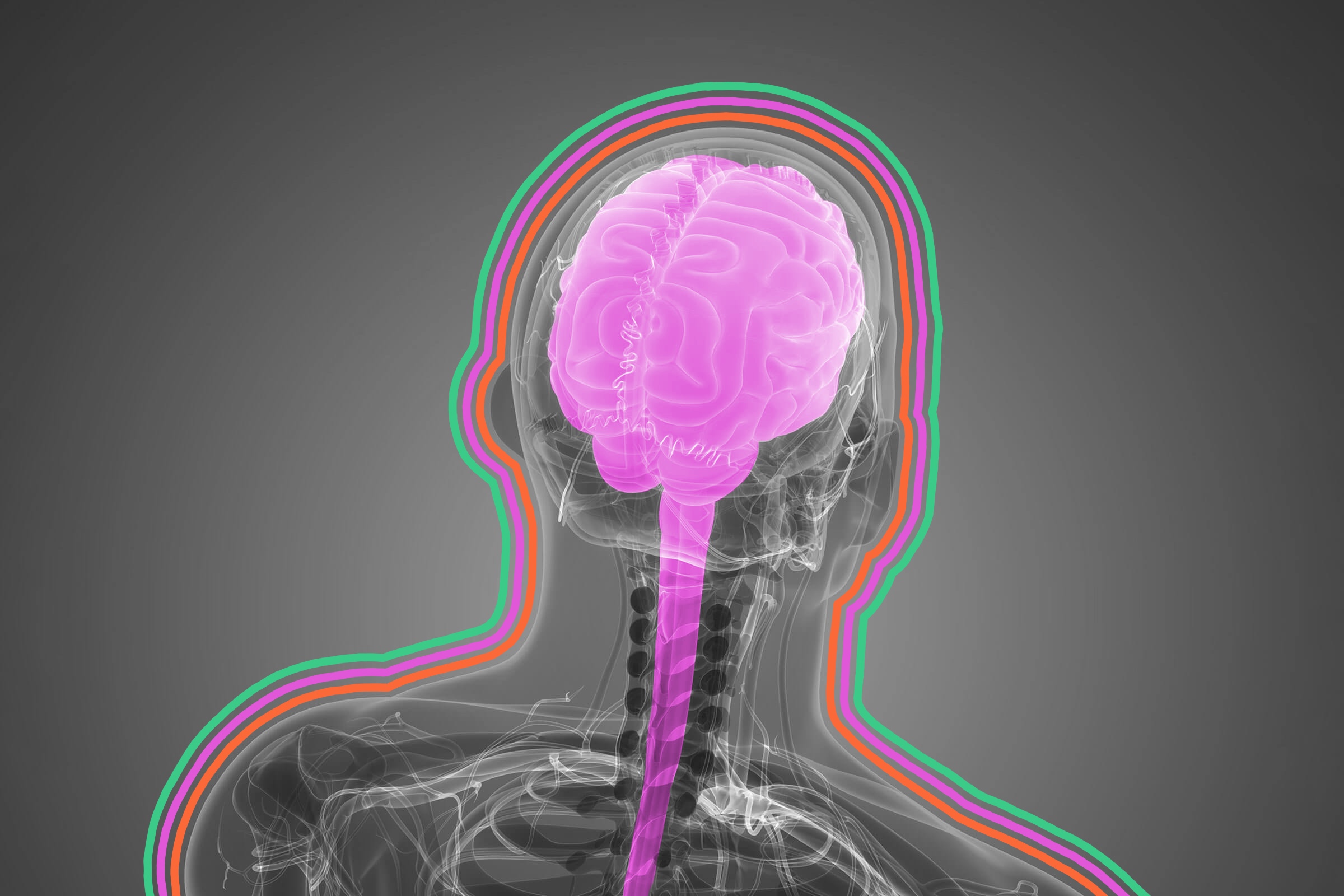
From the automatic tasks of regulating breathing and blood pressure to the voluntary efforts needed for muscle movement, the central nervous system puts in a lot of work to maintain the complex mechanisms of the human body. Pace is crucial to keep this system running smoothly — which is why some signals from our body’s command centers can reach a speed of 268 miles per hour.




Oops, incorrect!
It’s a fibAlthough this concept is a popular “fact” thrown out in movies and TV shows, people tend to use the entirety of their brains over the course of a day.
In a nutshell, nerve cells in the brain and spinal cord send information through branching nerve fibers known as axons, which release chemicals across microscopic gaps to be picked up by other cells and synthesized by the appropriate areas of the body. The speed of this process varies according to the size and properties of the nerve fiber; bulky A-alpha axons, which can be 20 micrometers in diameter, have the bandwidth to generate the fastest impulses. Additionally, gaps along axons that are covered by a sheath of fats and protein, known as myelin, contain positive sodium ions that keep signals charged for rapid transmission.
So which bodily act necessitates the thickest channels to conduct information at speeds approaching those of the world’s fastest cars? That would be the delicate balance required for proprioception, our ability to sense the movement and positioning of body parts without looking. At the other end of the spectrum are the unmyelinated fibers that relay pain signals at a near-crawl of 1 mile per hour — evidence that our central nervous systems at least attempt to cushion the blow when serving as the bearer of bad news.

The chemical messengers that carry signals from nerve cells to other cells are called ______.
Ready to reveal?
Confirm your email to play the next question?