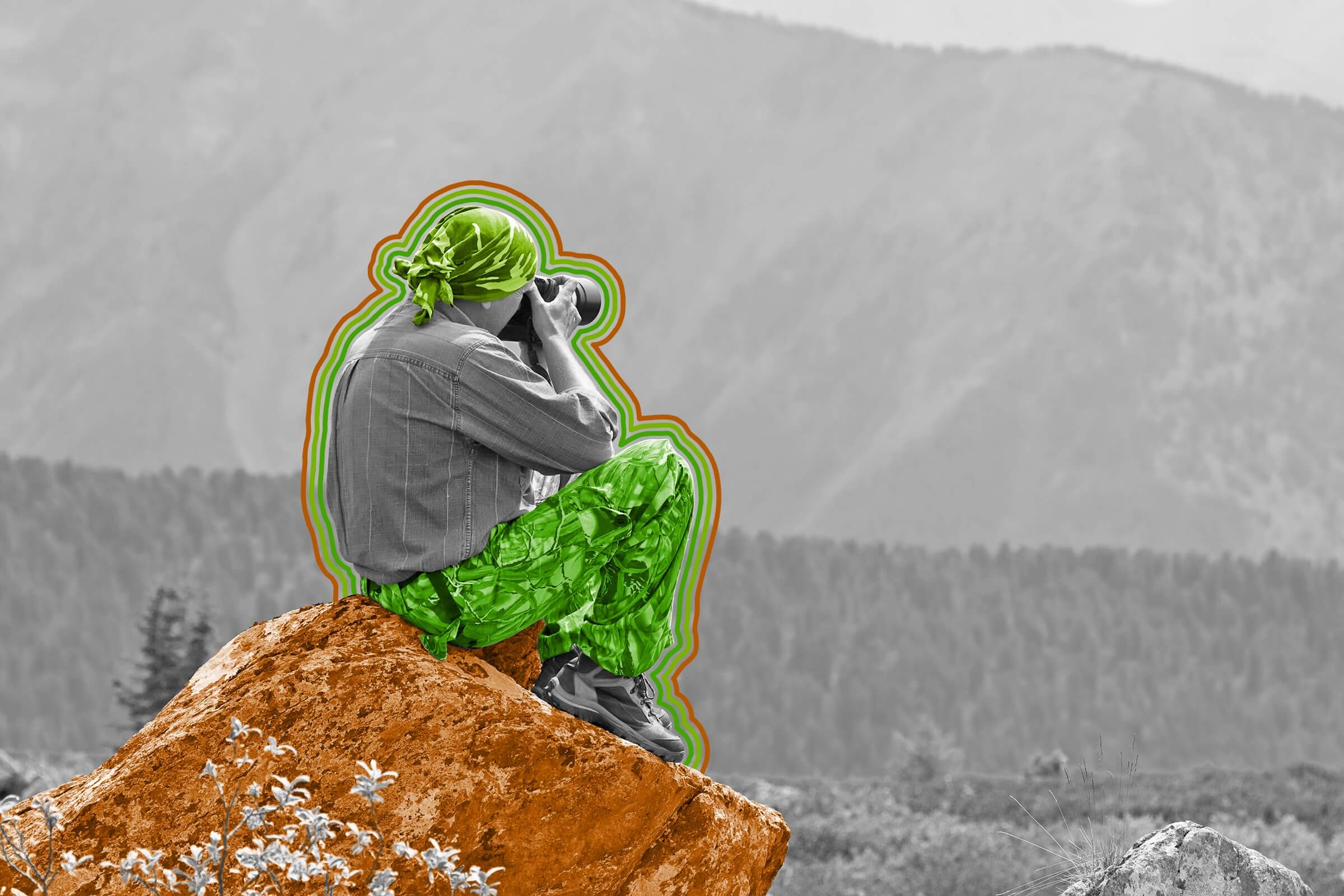
For those in the military, camouflage can be the difference between life and death. For those who simply think it looks cool, it’s considerably less essential. With that in mind, it makes a certain amount of sense that many countries have banned civilians from wearing it. Those nations include Antigua and Barbuda, The Bahamas, Barbados, Dominica, Ghana, Grenada, Guyana, Jamaica, Nigeria, Oman, St. Lucia, St. Vincent and the Grenadines, Saudi Arabia, Trinidad and Tobago, Uganda, Zambia, and Zimbabwe.




Oops, incorrect!
It’s a fibA chameleon usually changes color to reflect its emotional state, as when trying to attract a mate or ward off a foe, or to regulate its temperature. Camouflage is an added benefit of this ability, but not the main reason for it.
In some cases this is because civil unrest has given rise to paramilitary organizations, and any civilian wearing camo could be mistaken for a member of such groups or even of the actual armed forces — a potentially dangerous scenario in which to find oneself. The regulations for wearing camo differ greatly between countries, however. Some, such as Trinidad and Tobago, ban all forms of military-style camouflage (even styles clearly worn for fashion), while others ban only the specific patterns used by their military.

Camouflage is also known as ______.
Ready to reveal?
Confirm your email to play the next question?