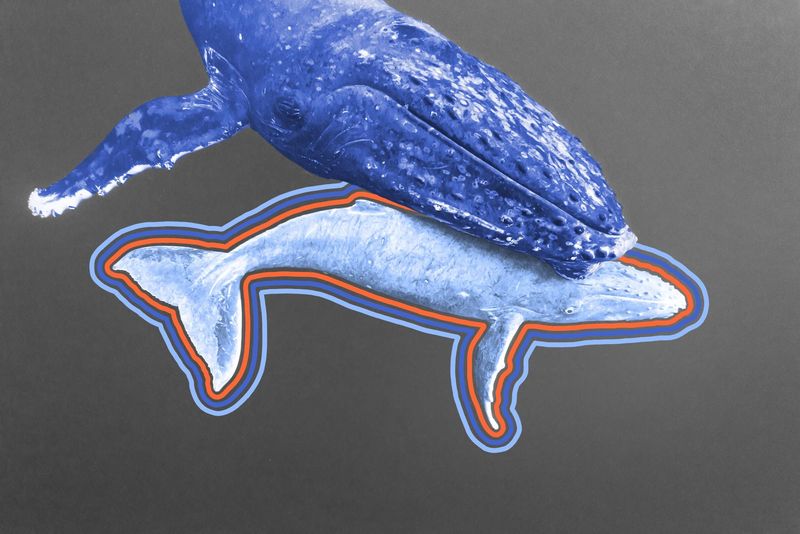
In their first year of life, human babies nearly triple their weight. And while that sounds like an impressive stretch of growth, it’s nothing compared to blue whales. These cetacean newborns, which already weigh around 3 tons at birth, pack on upwards of 200 pounds a day, meaning baby blue whales bulk up at a rate of about 8 pounds an hour. This incredible growth spurt makes sense when you analyze a young blue whale’s diet, which consists exclusively of 100 gallons of its mother’s milk every day — and this isn’t anything like the milk you buy at the grocery store. Where cow-supplied whole milk contains around 3.25% milk fat, a female blue whale’s milk contains up to 50% milk fat. A blue whale calf will nurse with its mother for about seven months until reaching around 52 feet in length and tipping the scales at around 23 tons.




Oops, incorrect!
It’s a factBlue whales aren’t just the largest animals on Earth today — they’re the largest animals ever. A female blue whale can weigh as much as 30 elephants, its heart weighs as much as a gorilla, and its body stretches as long as three school buses end to end.
Although weighing around 400,000 pounds fully grown seems like a drag (literally), it actually comes with numerous benefits. For one, blue whales have almost no natural predators (other than the occasional orca) due to their immense size, and their massive bulk helps them swim faster to feeding and mating grounds. However, unlike other whale species, blue whales need to eat almost constantly — one adult blue whale can consume up to 4 tons of krill daily. In other words, their voracious appetite isn’t so much a childhood fad as it is a lifelong strategy for survival.

The Roman predecessor of the pound is the ______ (hence the abbreviation “lb”).
Ready to reveal?
Confirm your email to play the next question?